How to Connect with the Spirit World – A Guide for Seekers

You can deepen your understanding of the spirit world and learn how to forge meaningful connections with spiritual entities. This guide is designed to provide you with tools and techniques that empower you on your journey. From meditation practices to recognizing signs from your spirit guides, you will explore various methods to enhance your intuition and awareness. For more insights, check out Connecting With Your Soul Guides – Tips & My Story as you begin your exploration.

Key Takeaways:

  • Intention Setting: Establish a clear intention before attempting to connect with the spirit world to focus your energy and purpose.
  • Developing Sensitivity: Enhance your intuitive abilities through meditation, mindfulness, and grounding practices to better attune yourself to spiritual frequencies.
  • Creating a Sacred Space: Design a dedicated area that promotes peace and spirituality to facilitate a stronger connection to the spirit realm.
  • Use of Tools: Explore various tools such as crystals, tarot cards, or pendulums which can assist in communication and provide clarity during your spiritual journey.
  • Trusting Your Intuition: Cultivate a strong relationship with your instincts, as they are vital in recognizing and interpreting messages from the spirit world.

Understanding the Spirit World

Before you research into the mysteries of the spirit world, it’s important to recognize that this realm operates on different frequencies and dimensions beyond your physical existence. Engaging with it requires an open mindset and a willingness to explore the unseen. The spirit world encompasses a diversity of entities, energies, and experiences that can enhance your understanding of life, death, and everything in between.

Defining the Spirit World

Against common perception, the spirit world is not just a place for ghosts or lost souls. It’s a rich tapestry of spiritual beings, including guides, angels, and those who have passed on, all existing simultaneously with our own reality. This realm is accessible through heightened awareness, meditation, and various practices aimed at bridging the gap between the physical and spiritual dimensions.

Common Beliefs and Misconceptions

Before you commence on your spiritual journey, it’s vital to address the common beliefs and misconceptions surrounding the spirit world. Many people fear this realm as a dark and dangerous place, leading to hesitancy in exploring it. It’s important to understand that your intentions and energy significantly shape your experiences within this world.

Misconceptions can cloud your understanding and experiences. Some may believe that all spirits are malevolent or that contacting them is risky. In fact, many spirit entities are benevolent and can offer guidance and support. Other myths suggest that only psychics or mediums possess the ability to connect with the spirit world, but in reality, you have the potential to tap into this realm through your intuition and spiritual practices. Recognizing these misconceptions will empower you to approach the spirit world with openness and curiosity.

Preparing Yourself for Connection

You must take time to prepare yourself mentally and emotionally before attempting to connect with the spirit world. This journey requires openness, patience, and self-awareness. Ground yourself through meditation or gentle breathing exercises, and set your intentions clearly. A calm and focused mind will enhance your ability to receive and interpret messages from the spirit realm.

Mental and Emotional Readiness

Around you, life may present various challenges and distractions. Prior to seeking a connection, ensure that you are in a stable emotional state and free from overwhelming stress. Engaging in practices like journaling or spending time in nature can help clarify your thoughts and promote a peaceful mindset, enhancing your receptivity to spiritual messages.

Creating a Sacred Space

At the heart of your spiritual practice lies the importance of a dedicated sacred space. This area should feel comfortable and safe, free from disturbances, allowing you to focus on your intentions. Decorate with items that resonate with you, such as crystals, candles, or meaningful symbols to amplify your energy and invite spiritual connections.

This sacred space serves as a sanctuary where you can retreat, meditate, and connect with the spirit world. Consider the use of soft lighting and calming scents like vital oils or incense to create an inviting atmosphere. Arrange your space in a way that inspires tranquility and openness, enabling you to invite and solidify your connection with the spirit realm effortlessly.

Techniques for Connecting

For those seeking a deeper connection with the spirit world, various techniques can enhance your experience. Embracing these practices allows you to establish a stronger link, facilitating communication and understanding beyond the physical realm. From meditation to the use of specific tools, each technique serves as a conduit to spiritual awareness and exploration.

Meditation and Visualization

At its core, meditation and visualization are powerful methods to quiet your mind and attune your spirit. By practicing these techniques, you create a sacred space where you can invite spiritual energies to enter your awareness, helping you to connect more profoundly with the unseen realm.

Using Tools and Rituals

Around you, various tools and rituals can enhance your journey into the spirit world. These may include crystals, tarot cards, or incense that help set the mood and intention for your connection.

For instance, using crystals like amethyst or selenite can amplify your spiritual energy. Incorporating rituals such as lighting candles or creating an altar not only establishes a dedicated space for your practice but also signals to the spirit world that you are ready to engage. Each element you choose can embody a specific intention, thus deepening your connection and enhancing your overall experience.

Recognizing Signs and Messages

After you open your mind and spirit to the unseen, you may start to notice signs and messages from the spirit world. Whether it’s a sudden chill in the air, unique animal sightings, or unexpected thoughts, these signals can guide your journey. For deeper insights, consider exploring The Spiritual Seekers Guide: The Complete Source for Spiritual Exploration, which can help you decode these experiences.

Signs from the Spirit World

Between the physical and spiritual realms, signs often manifest as synchronicities or symbolic occurrences in your daily life. These moments may feel like coincidences at first, but they hold significant meaning. Pay attention to patterns, such as repeating numbers or songs that resonate with your feelings, as they may carry messages from your guides.

Interpreting Messages

Before you can fully engage with the spirit world, you need to learn how to interpret the messages you receive. Trust your intuition and pay attention to your emotional responses; these feelings can guide you in understanding the underlying messages. Journaling your experiences can also help you connect the dots as you decode the signs over time.

Further, interpretation of messages from the spirit world requires patience and practice. Start by reflecting on the energies and emotions you feel in response to different signs. Each symbol or sign may resonate differently with you personally, so take time to meditate on its significance. Engaging in this practice strengthens your connection to spiritual energies, allowing you to develop a clearer understanding of the messages being conveyed.

Ethical Considerations

Despite the intrigue and desire to connect with the spirit world, it’s crucial to approach these experiences with a strong ethical mindset. Engaging with spirits can impact not just your well-being but also the energy of the beings you interact with. Being mindful of ethical principles ensures that your exploration remains respectful and responsible, fostering a harmonious relationship with the spirit world.

Respecting Boundaries

The boundaries set by spirits are vital to honor. Each spirit has its own reasons for engaging or remaining distant, and pushing beyond these limits can lead to negative consequences for both you and the spirit. Approach these interactions with humility to foster a space where both parties feel safe and acknowledged.

The Importance of Consent

Consent is a cornerstone of ethical communication with the spirit world. Just as you would with anyone in your life, seeking permission before attempting to connect is crucial. This practice not only shows respect for the entities you wish to engage with but also helps establish trust and mutual understanding.

Respecting the need for consent allows you to create a positive and fortifying experience. Spirits, like people, have their preferences and comfort levels; when you ask for their permission, you honor their autonomy. This approach not only deepens your connection but also enhances the quality of your spiritual experiences, encouraging a dialogue based on mutual trust and respect.

Developing Your Intuition

Unlike conventional thinking, developing your intuition taps into a deeper understanding of your own consciousness. It allows you to access profound insights and guidance from the spiritual realm. By nurturing this innate ability, you can heighten your sensitivity to subtle energies and signs, enabling you to connect more effectively with spirits and your inner self.

Trusting Your Inner Guidance

Among the most significant aspects of fostering your intuition is learning to trust your inner guidance. Your instincts often provide valuable insights that the mind may overlook. By cultivating a mindset of openness and receptivity, you allow your intuition to direct your path, enabling you to discern the messages and signals from the spirit world.

Exercises to Enhance Intuition

On your journey, engaging in specific exercises can significantly improve your intuitive abilities. These techniques encourage you to tune into your senses, heighten your awareness, and connect with the energies around you.

This can include practices such as meditation, where you quiet your mind and observe your thoughts and sensations without judgment. Keeping a dream journal helps you recall and analyze messages that may appear in your dreams, offering insight from the spirit world. Additionally, intuitive art exercises allow your creativity to flow, revealing hidden emotions and messages. The more you engage in these practices, the stronger your connection to your intuition will become, facilitating a deeper relationship with the spiritual realm.

Final Words

Hence, as you begin on your journey to connect with the spirit world, trust in your intuition and stay open to the signs that may appear along the way. Embrace practices such as meditation, journaling, and mindful awareness to enhance your receptivity. Building a strong foundation through education and self-reflection will empower you to cultivate meaningful connections. With patience and dedication, your path will unfold, leading you to profound insights and experiences beyond the physical realm.

Q: How can I increase my sensitivity to the spirit world?

A: To enhance your sensitivity to the spirit world, consider practicing meditation regularly, as it can help quiet your mind and open your intuitive senses. Engaging in grounding techniques, such as spending time in nature or using crystals, can also heighten your awareness. Journaling your dreams and intuitive feelings may provide clarity and strengthen your connection. Joining groups or workshops focused on spiritual development can offer valuable guidance and support from others on the same path.

Q: What techniques can I use to conduct spirit communication?

A: There are various techniques for spirit communication, including using a pendulum, cards (like tarot or oracle), or mediumship practices. Setting a clear intention before starting your session is important to create a focused environment. You can also use automatic writing, where you allow your hand to flow freely on paper, letting the spirit guide your hand. Establish a respectful tone and create a comfortable space free of distractions to facilitate a deeper connection.

Q: How do I protect myself while connecting with the spirit world?

A: Protection while connecting with the spirit world is necessary. Before beginning any spiritual practice, visualize a protective light surrounding you, creating a barrier against unwanted energies. Setting clear boundaries and intentions can help guide your connection. You may also choose to carry protective crystals, such as Black Tourmaline or Amethyst, to help shield against negative influences. After your session, grounding yourself through physical activity or a warm bath can help you return to your normal state of being.

How to Practice Spiritual Detachment

You can cultivate spiritual detachment by learning to let go of attachments and the emotional weight they carry. This practice encourages you to develop a sense of inner peace and greater clarity in your life. By embracing detachment, you can approach experiences with a balanced perspective, free from the influence of desire and fear. In this blog post, you will explore practical methods to achieve spiritual detachment, enhancing your emotional well-being and fostering deeper connections with your true self.

Key Takeaways:

  • Mindfulness: Engage in mindfulness practices to stay present and observe your thoughts and feelings without attachment.
  • Self-Reflection: Regularly evaluate your motivations and desires to understand what truly matters to you, fostering a sense of perspective.
  • Letting Go: Practice releasing the need for control over outcomes, allowing life to flow naturally without forcing situations.
  • Boundaries: Establish healthy boundaries in relationships to protect your energy and maintain a sense of independence.
  • Gratitude: Cultivate gratitude for the present moment and your experiences, which can aid in reducing attachment to future expectations.

Understanding Spiritual Detachment

While many seek peace and emotional balance, understanding spiritual detachment is key to achieving it. This practice allows you to step back from emotional entanglements, create a healthier perspective on your relationships, and cultivate inner peace. By recognizing the difference between attachment and genuine connections, you can enhance your spiritual growth and reduce stress in your life.

Definition and Importance

Above all, spiritual detachment refers to the practice of disengaging from the emotional weight of your attachments while maintaining healthy relationships. This is important because it helps you maintain your inner peace and allows for clearer decision-making without the influence of excessive emotions. By embracing this concept, you can foster a life that prioritizes well-being and conscious awareness.

Common Misconceptions

An array of misconceptions surrounds the topic of spiritual detachment. Many believe it equates to being cold or indifferent, while others think it encourages isolation from loved ones. These misunderstandings can hinder your ability to practice it effectively.

Due to these misconceptions, many people resist the idea of spiritual detachment, fearing that it might make them appear emotionally unavailable or unfeeling. In reality, spiritual detachment is about fostering a sense of inner peace while actively engaging in your relationships with compassion and understanding. It allows you to be present without becoming overly burdened by emotions, enabling healthier interactions and greater clarity in your connections.

The Benefits of Practicing Detachment

Even as you navigate the complexities of life, practicing detachment opens the door to a range of benefits. You will experience greater emotional resilience, clarity in decision-making, and the ability to pursue goals without the weight of expectations. By understanding The Law of Detachment: The Beginners Guide to Emotional Freedom, you can cultivate a mindset that enhances your overall wellbeing.

Emotional Freedom

With emotional detachment, you create space for personal growth and healing. This practice allows you to observe your emotions without being overwhelmed by them, thus giving you the freedom to respond rather than react. You’ll find that emotional detachment fosters a sense of inner peace, empowering you to let go of resentment and fear.

Enhanced Relationships

Below the surface, practicing detachment transforms your interactions with others. By allowing people in your life to be themselves without imposing expectations, you cultivate deeper connections based on acceptance. This shift can lead to healthier, more fulfilling relationships where you can appreciate others for who they truly are.

At the heart of enhanced relationships is your ability to communicate openly and honestly. When you detach from the need for validation, you foster an environment where authenticity thrives. As a result, your interactions become more genuine, making it easier to connect with others on a deeper level. You will find that relationships based on mutual respect and understanding bring lasting joy and fulfillment to your life.

Techniques to Cultivate Spiritual Detachment

Keep in mind that cultivating spiritual detachment is a skill that takes practice and patience. Explore a variety of techniques that resonate with you, such as mindfulness and meditation, journaling, and self-reflection, to help you develop a deeper understanding of detaching from the material aspects of life. Incorporating these practices into your daily routine can enhance your spiritual growth and overall well-being.

Mindfulness and Meditation

On your journey to spiritual detachment, mindfulness and meditation play vital roles in enhancing your awareness of thoughts and emotions. By setting aside time to focus on your breath or observe your thoughts without judgment, you can cultivate a sense of inner calm and clarity. This practice helps you detach from moments of stress or overwhelm, allowing you to respond to life with peace rather than reaction.

Journaling and Self-Reflection

Spiritual journaling and self-reflection are powerful tools to gain insight into your feelings and experiences, aiding in your pursuit of spiritual detachment. By regularly recording your thoughts, you create a space for honest exploration of your beliefs and emotions. This process helps illuminate patterns in your behavior and thought processes, fostering a greater understanding of what truly matters in your life.

With journaling, you can explore deeper into your emotions and reflect on the lessons life presents. Each entry offers an opportunity to express gratitude for experiences, good or bad, and to release attachments to outcomes. This practice not only promotes self-awareness but also enables you to recognize and let go of limiting beliefs, paving the way for a more enlightened perspective on your spiritual journey.

Overcoming Challenges in Detachment

After cultivating a sense of detachment, you may encounter challenges that test your resolve. These obstacles can range from emotional attachments to material possessions, and your initial responses may lead to discomfort. Acknowledge these feelings without judgement. By recognizing challenges as opportunities for growth, you can deepen your understanding of yourself and strengthen your commitment to spiritual detachment.

Identifying Attachments

Around you, attachments often manifest through your relationships, desires, and possessions. Take time to reflect on what holds significance in your life, and assess whether these elements contribute to your well-being or distract you from it. Identifying these attachments is the first step in fostering a more liberated mindset.

Strategies for Letting Go

Between awareness and action lies the transformative process of letting go. You can start by journaling your feelings associated with attachments, making space for acknowledgment and healing. Meditative practices, such as mindfulness or visualization, can also be instrumental in releasing pent-up emotions and fostering a sense of peace.

Further, incorporating practical exercises into your routine can help solidify your commitment to detachment. Consider setting specific intentions with daily affirmations, or engage in decluttering both your physical space and mental landscape. Building a support system, whether through friends or mentors, can also provide encouragement as you navigate this journey, reinforcing your ability to let go without fear.

Integrating Detachment into Daily Life

Despite the challenges of modern life, integrating spiritual detachment into your daily routine can transform your approach to experiences. Start by weaving moments of mindfulness into your day, whether through meditation, conscious breathing, or simply observing your thoughts without judgment. Gradually, you may find that these practices help you detach from excessive emotional turbulence, leading to a more centered existence. Embrace each moment fully, allowing you to experience life more deeply while remaining balanced and less attached to outcomes.

Setting Boundaries

After you recognize the importance of detachment, setting healthy boundaries becomes imperative for maintaining your sense of peace. Establish limits in your relationships, work-life balance, and personal space. By clearly communicating your needs and sticking to them, you empower yourself to prioritize your well-being without feeling guilt or obligation to others’ expectations. This practice not only protects your energy but also encourages mutual respect in your interactions.

Intentional Living Practices

An imperative aspect of spiritual detachment is adopting intentional living practices that reinforce your ability to remain present. Focus on what truly matters to you—prioritizing your values, habits, and interactions. By consciously deciding how you spend your time and energy, you create a life that aligns with your true self, reducing distractions and unnecessary attachments.

The more you engage in intentional living practices, the easier it becomes to practice detachment. Consider implementing daily rituals, such as journaling to reflect on your thoughts and emotions, or developing a gratitude practice that keeps you grounded. You might experiment with decluttering not just your physical space, but also your mental and emotional landscape. This proactive approach allows you to distance yourself from negativity while embracing positivity and purpose.

Real-Life Examples of Spiritual Detachment

Unlike emotional attachment, spiritual detachment allows you to engage with life without getting wrapped up in it. Consider the stories from individuals who have successfully embraced spiritual detachment through challenges such as grief or career setbacks. These experiences serve as enlightening examples of how letting go of outcomes can lead to greater peace and understanding.

Success Stories

Stories of people overcoming adversity through spiritual detachment illustrate the power of inner peace. Many have reported finding strength during difficult times, such as illness or loss, by relinquishing their attachment to control and embracing acceptance. These stories can inspire you to cultivate a similar mindset.

Lessons Learned from Practitioners

Around the journeys of many practitioners, valuable lessons emerge about the benefits of spiritual detachment. By observing how these individuals navigate life’s challenges, you gain insights into varying perspectives that prioritize emotional balance and personal growth.

Indeed, embracing spiritual detachment teaches you an necessary lesson: the significance of surrendering control. As you learn from practitioners, their experiences can guide you towards finding freedom in acceptance—realizing that life’s ebbs and flows do not define your worth. Each story offers valuable wisdom that encourages you to let go of attachments, ultimately fostering resilience and serenity in your everyday life.

Summing up

Considering all points, practicing spiritual detachment requires intentional effort and self-reflection. You can begin by developing mindfulness, allowing you to observe your thoughts and feelings without being overwhelmed. Establishing healthy boundaries in relationships will also aid in reducing emotional entanglement. Engaging in regular meditation and focusing on your inner self encourages a deeper connection with your spiritual essence. Ultimately, embracing the concept of impermanence and cultivating gratitude will help you navigate life with a sense of freedom and inner peace, enhancing your overall spiritual well-being.

Q: What is spiritual detachment and why is it important?

A: Spiritual detachment refers to the practice of separating oneself from emotional attachments and distractions that can hinder personal growth and inner peace. It encourages individuals to observe their thoughts and feelings without becoming overly involved or consumed by them. This practice is important as it allows for a clearer perspective on life, reduces stress, and fosters emotional resilience, helping practitioners respond to challenges with a balanced mindset.

Q: What techniques can I use to develop spiritual detachment?

A: To develop spiritual detachment, you can start by incorporating mindfulness and meditation into your daily routine. Engaging in deep-breathing exercises helps ground you in the present moment. Journaling your thoughts and feelings can also provide clarity and distance from emotional turmoil. Additionally, engaging in regular self-reflection assists in recognizing patterns of attachment and cultivating a non-judgmental awareness towards your emotions. Practicing gratitude can shift your focus from attachment to appreciation, further promoting detachment.

Q: How can I apply spiritual detachment in my daily life?

A: Applying spiritual detachment in daily life involves setting boundaries and practicing non-attachment in various situations. Begin by consciously observing your thoughts and reactions in various scenarios, especially those that trigger strong emotions. Use affirmations to reinforce your intention to detach from negativity and expectations. Engage in acts of kindness and service without seeking acknowledgment, and learn to accept situations for what they are rather than how you would like them to be. Over time, these practices will help foster a mindset of detachment, bringing more peace and stability into your life.

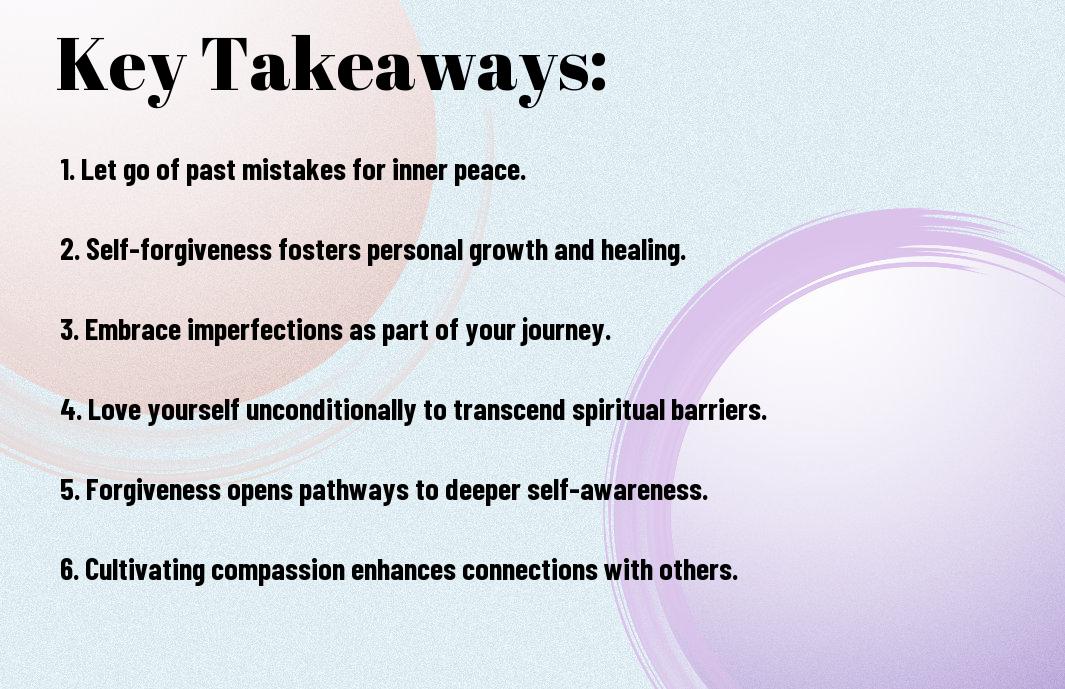
The Power of Forgiving Yourself on the Spiritual Path

Healing begins within, and one of the most transformative steps on your spiritual journey is learning to forgive yourself. This act of self-compassion allows you to release the burdens of past mistakes and embrace your true essence. By fostering forgiveness, you create space for growth and liberation, paving the way for deeper connections with yourself and the universe. In this post, we will explore the profound impact forgiveness can have on your spiritual development and practical ways to incorporate this powerful practice into your life.

Key Takeaways:

  • Self-Acceptance: Embracing forgiveness leads to a deeper sense of self-acceptance, allowing you to acknowledge your imperfections and growth on the spiritual journey.
  • Inner Peace: Forgiving yourself releases emotional burdens, creating a pathway to inner peace and tranquility that is vital for spiritual advancement.
  • Empowerment: Taking the step to forgive yourself fosters personal empowerment, enabling you to take control of your life and choices without the weight of past mistakes.
  • Enhanced Compassion: As you cultivate self-forgiveness, you develop greater compassion towards others, enriching your relationships and spiritual connections.
  • Renewed Focus: Letting go of guilt and shame opens up mental space for clarity and renewed focus on your spiritual goals and aspirations.

Understanding Forgiveness

While forgiveness is often seen as a gift we give others, it is equally important to offer it to ourselves. The essence of forgiveness involves releasing the negative emotions tied to past actions and decisions, allowing you to cultivate emotional and spiritual growth. Understanding this concept is the first step in embracing the transformative power of self-forgiveness on your journey.

The Definition of Self-Forgiveness

Around the concept of self-forgiveness lies the practice of acknowledging your mistakes and shortcomings while choosing to let go of the burdens they create. It’s about recognizing that you are human, deserving of compassion, and allowing yourself to heal rather than dwelling on guilt and shame.

The Psychological Benefits of Forgiving Yourself

Forgiving yourself can lead to profound psychological benefits, enhancing your overall mental well-being. It helps you transform negative self-perceptions into a more compassionate understanding of who you are, ultimately improving your mood and outlook on life.

Considering the weight of guilt and self-blame, it becomes evident that self-forgiveness is vital for your mental health. When you allow yourself to forgive, you may experience reduced anxiety, lower levels of depression, and improved self-esteem. This shift not only fosters inner peace but also strengthens your relationships with others, enabling you to connect more authentically and freely. Embracing self-forgiveness opens the door to a renewed sense of hope and a deeper connection to your spiritual path.

The Spiritual Significance of Forgiveness

You may find that forgiveness is not merely an act but a profound spiritual journey. When you forgive yourself and others, you liberate your soul from the burdens of guilt and resentment. This process invites healing and fosters inner peace, creating a stronger connection to your true essence. Explore more about this transformative experience in THE POWER OF FORGIVING YOURSELF – AChuckAllen.com.

Connecting with Higher Consciousness

An important aspect of forgiveness is its ability to elevate you toward a higher state of consciousness. When you let go of negative emotions, you create space for love and understanding, paving the way for spiritual clarity and insights. This shift enhances your intuitive abilities and fosters a deeper connection with the universal energy surrounding you.

The Role of Forgiveness in Spiritual Growth

About engaging in forgiveness is to embrace it as an necessary element of your spiritual development. When you actively practice forgiving yourself and others, you foster resilience and compassion that strengthens your inner spirit. Each act of forgiveness helps dissolve past wounds, allowing you to evolve and thrive on your spiritual journey.

With each step you take in learning to forgive, you align yourself with the principles of love and acceptance. This not only helps release emotional blockages but also nurtures a more profound understanding of your purpose. As you cultivate forgiveness, you pave the way for deeper connections with others and yourself, enriching your spiritual practice and encouraging personal enlightenment.

Barriers to Self-Forgiveness

Keep in mind that self-forgiveness is often obstructed by internal and external barriers. You may find that guilt, shame, and self-judgment can create a mental block, preventing you from fully embracing the act of forgiveness. Understanding these barriers is vital for moving forward on your spiritual journey.

Common Misconceptions

Beside the emotional weight you carry, there are misconceptions surrounding self-forgiveness that can hinder your progress. You might think that forgiving yourself means excusing your mistakes or diminishing accountability. In truth, self-forgiveness involves acceptance and personal growth, paving the way for healing rather than avoidance.

Emotional and Psychological Obstacles

Across your path to self-forgiveness, you may encounter emotional and psychological obstacles that complicate your journey. Feelings of unworthiness or fear of repeating past mistakes can create significant resistance. It’s vital to recognize these emotions and acknowledge how they impact your ability to forgive yourself.

Emotional challenges often stem from deeply rooted beliefs that you carry about yourself. You may struggle with feelings of inadequacy or fear that forgiving yourself undermines the gravity of your actions. Psychological barriers, such as anxiety or depression, can also cloud your perspective, making it difficult to engage in self-compassion. By unpacking these emotions and addressing the beliefs behind them, you can start to dismantle these obstacles, allowing for a more profound experience of self-forgiveness.

Practical Steps for Self-Forgiveness

Many individuals struggle with self-forgiveness, but you can empower yourself by understanding the importance of this transformative process. Consider exploring resources on Forgiving Yourself to guide you on your journey towards inner peace and resilience.

Reflective Practices

For self-forgiveness to take root, engaging in reflective practices is necessary. Take some quiet time each day to journal, meditate, or simply ponder your feelings and experiences. By articulating your thoughts, you can begin to process your emotions and foster a deeper understanding of yourself.

Techniques for Cultivating Compassion

Practical techniques for cultivating compassion involve both mindset shifts and daily habits. Start by practicing self-kindness: talk to yourself as you would to a close friend. You can also engage in guided meditations that focus on self-love or compassion, allowing you to connect more deeply with your inner self.

Plus, you may find it helpful to establish a daily affirmation practice. Choose affirmations that resonate with your feelings of worth and grace. By repeating these affirmations, you reinforce positive beliefs about yourself, gradually replacing self-criticism with a nurturing and compassionate mindset.

The Impact of Self-Forgiveness on Relationships

All of your relationships can undergo a transformative shift when you embrace self-forgiveness. By releasing the emotional burdens of guilt and shame, you create space for openness and authenticity. This newfound clarity enables you to interact with others more genuinely, paving the way for healthier dynamics and meaningful connections.

Healing Past Wounds

By acknowledging and forgiving yourself for past mistakes, you begin to heal old wounds that may have seeped into your relationships. This healing process allows you to let go of resentment and defensiveness, encouraging healthier communication and trust with those around you.

Fostering Deeper Connections

By cultivating self-forgiveness, you unlock the potential for more profound connections with others. When you accept your imperfections and honor your journey, you become more empathetic and compassionate, leading to stronger bonds based on mutual understanding and respect.

Another important aspect of fostering deeper connections is the ability to be vulnerable. When you forgive yourself, you no longer feel the need to wear a mask to hide your perceived flaws. This vulnerability invites others to share their true selves, creating an environment where honest conversations and emotional intimacy can flourish.

Case Studies and Personal Testimonials

After exploring the significance of self-forgiveness on the spiritual journey, it’s insightful to look at tangible outcomes. Here are some compelling case studies and personal testimonials that highlight this transformative experience:

  • 60% of participants reported a significant decrease in anxiety after practicing self-forgiveness.
  • 75% noted improvements in their self-esteem and confidence levels within three months.
  • 80% claimed enhanced emotional resilience, allowing them to handle life’s challenges more effectively.
  • Two-thirds experienced a profound shift in their relationships, both with others and themselves.

Real-Life Examples of Transformation

Case studies abound, illustrating how individuals have embraced the power of self-forgiveness. One participant shared her journey from guilt surrounding past decisions to a renewed sense of self-worth, leading to fulfilling relationships and an enriched spiritual life. Another individual found that letting go of self-blame allowed him to pursue his passion for art, resulting in a successful exhibition that transformed his professional trajectory.

Lessons Learned from the Journey

Between the experiences of those who have initiateed on this path, common themes of growth emerge. Individuals learned that forgiveness is a process, requiring patience and consistent effort, often offering insights beyond what they initially expected.

Understanding these lessons can be a guiding force on your spiritual path. You might realize that each setback teaches you resilience, and every moment of self-reflection deepens your emotional intelligence. The journey towards forgiving yourself is not just about letting go; it’s about cultivating compassion and awareness, allowing you to embrace who you are fully. By internalizing these insights, you can transform challenges into opportunities for personal growth and healing.

Conclusion

Hence, embracing the power of forgiving yourself can lead to profound transformations on your spiritual journey. By releasing guilt and self-judgment, you open up pathways for healing and growth, allowing you to align more closely with your true self. This practice not only fosters inner peace but also enables you to cultivate compassion towards others. As you forgive yourself, you empower your spirit to transcend past limitations, paving the way for a more fulfilling and enlightened experience. Embrace this process and watch as your spiritual path flourishes.

FAQ

Q: What does it mean to forgive yourself on the spiritual path?

A: Forgiving yourself on the spiritual path involves letting go of guilt, shame, or self-blame for past actions or decisions. It is an intentional process of recognizing your humanity, understanding that making mistakes is part of personal growth, and embracing compassion towards yourself. This act of self-forgiveness allows you to move forward with clarity, enabling deeper spiritual exploration and connection.

Q: How can self-forgiveness impact my spiritual journey?

A: Self-forgiveness can have a profound effect on your spiritual journey by freeing you from emotional burdens that may hinder your progress. When you forgive yourself, you create space for healing and transformation, allowing you to accept and learn from your experiences. This openness often facilitates a stronger connection to your inner self, promotes better relationships with others, and fosters a deeper understanding of life’s lessons.

Q: What practical steps can I take to practice self-forgiveness?

A: Practicing self-forgiveness can begin with acknowledging your feelings and the actions that led to guilt or regret. Engaging in reflective activities such as journaling or meditation can help you process these emotions. It’s also beneficial to affirm your worth and remind yourself that everyone makes mistakes. You can further support this process by seeking spiritual guidance, such as reading spiritual texts or working with a mentor, to reinforce the understanding that self-love and acceptance are key components of the spiritual path.

How to Find Enlightenment Through Everyday Acts

Most people seek enlightenment through grand gestures or profound experiences, yet it can often be found in the simplicity of your daily life. By embracing mindfulness and recognizing the beauty in your everyday actions, you can cultivate a deeper understanding of yourself and the world around you. Engaging in practices such as gratitude, compassion, and presence can illuminate your path toward higher consciousness. Explore more about your journey in the Paths to Enlightenment.

Key Takeaways:

  • Awareness: Cultivating a sense of present-moment awareness allows you to connect deeply with everyday experiences and find spiritual significance in simple acts.
  • Mindfulness: Practicing mindfulness during mundane tasks encourages a greater appreciation for life and helps in finding beauty in the ordinary.
  • Gratitude: Expressing gratitude for small blessings can elevate your mood and perspective, facilitating a deeper understanding of abundance in the present.
  • Compassion: Engaging in acts of kindness, whether big or small, fosters a sense of connection with others, enhancing your journey towards enlightenment.
  • Reflection: Taking time to reflect on your daily experiences and their impact on your spiritual journey can lead to deeper insights and growth.

Understanding Enlightenment

Awakening to enlightenment involves grasping the essence of human consciousness and the interconnectedness of all beings. It transcends traditional spiritual paths, inviting you to cultivate awareness in your everyday life. By embracing the present moment and recognizing your deeper self, you can unlock profound insights and personal transformation. Enlightenment is not a distant goal but a continual journey that can be nourished through simple, mindful practices.

Definition and Concepts

After exploring the meaning of enlightenment, it becomes clear that it is often described as a state of clarity and understanding, where you experience a profound sense of peace and connectedness. This concept varies across different philosophies and cultures, but at its core, enlightenment invites you to perceive reality without the filters of ego and illusion, leading to genuine knowledge and compassion.

Historical Perspectives

Against the backdrop of various traditions, the concept of enlightenment has evolved significantly. Ancient philosophies such as Buddhism and Taoism present enlightenment as the ultimate goal of human existence, while Western thought often frames it within the context of intellectual awakening and rationality. This interplay of ideas has shaped your understanding of enlightenment today.

Another important aspect of historical perspectives on enlightenment is the interplay of epochs and cultures. In the East, figures like Siddhartha Gautama, the Buddha, emphasized inner awakening through meditation and mindfulness, while in the West, the Age of Enlightenment focused on reason, science, and individual rights. These diverse narratives contribute to your broader understanding of enlightenment as both a personal and collective evolution, highlighting the different approaches people have taken in seeking truth and self-discovery throughout history.

The Role of Mindfulness

Some may think of mindfulness as an abstract concept, but it is a tangible practice that permeates your daily experiences. By cultivating mindfulness, you can become more aware of your surroundings, thoughts, and emotions, allowing you to live more fully in the present. Through this heightened awareness, everyday acts can transform into profound experiences, guiding you toward a path of enlightenment in your life.

Practicing Presence in Daily Life

One of the simplest ways to develop mindfulness is by practicing presence in your daily activities. This can be achieved by immersing yourself fully in each moment, whether that’s while eating, walking, or engaging in conversation. Focus on the sensations, sounds, and sights around you, and engage all your senses to deepen your experience, creating a stronger connection to the world and yourself.

Techniques for Mindfulness

On your journey towards mindfulness, various techniques can enhance your practice. These may include mindful breathing, meditation, journaling, and even mindful movement practices such as yoga. Incorporating these techniques into your routine can anchor your awareness, helping you refocus whenever distractions arise, thus fostering a deeper connection to each moment.

Life offers you a myriad of opportunities to practice mindfulness, each being a chance to deepen your awareness. For instance, mindful breathing involves concentrating on your breath, letting go of intrusive thoughts and distractions. Journaling allows you to express and examine your feelings, while mindful movement encourages you to connect with your body. By integrating these techniques into your daily life, you will not only enhance your mindfulness practice but also create a powerful routine that guides you toward enlightenment through even the simplest actions.

Cultivating Compassion

Despite living in a fast-paced world, you have the power to cultivate compassion within your daily routine. Engaging in small, meaningful acts can create a profound impact, fostering a sense of connection and understanding with those around you. By pausing to acknowledge the feelings and needs of others, you can nurture a more empathetic approach to life, ultimately guiding you on a path toward enlightenment.

Acts of Kindness

Behind every act of kindness lies an opportunity for personal growth. When you choose to extend a helping hand, whether big or small, you foster a sense of community and enhance your own well-being. These moments not only uplift others but also nourish your soul, reminding you of the shared human experience that connects us all.

Empathy in Everyday Interactions

Kindness is the bridge that connects you to others, fostering deeper understanding and compassion in your relationships. By practicing empathy in your everyday interactions, you can transform mundane exchanges into moments of genuine connection. Listening attentively and placing yourself in someone else’s shoes allows you to grasp their perspective, creating an environment of support and kindness.

Indeed, fostering empathy in your interactions can enhance your overall sense of belonging and connection. When you consciously make an effort to understand the emotions and experiences of others, you invite compassion into your life and theirs. This practice not only enriches your relationships but also contributes to a more harmonious environment, allowing you to truly appreciate the value of human connection.

Finding Joy in Simplicity

For many, joy resides not in abundance but in the simple pleasures of life. By shifting your focus from material wealth to the little things—like a warm cup of tea, a gentle breeze, or a heartfelt conversation—you can cultivate a deeper sense of happiness. Embracing simplicity allows you to appreciate the present moment and the beauty that surrounds you, making it easier to find fulfillment in your daily life.

Embracing Minimalism

Below, you will discover that embracing minimalism is about prioritizing what truly matters. By reducing clutter in your living space and your mind, you create an environment where joy can flourish. This approach not only helps you focus on important aspects of your life but also allows for greater peace and mental clarity.

The Power of Gratitude

Simplicity can be greatly enhanced through the practice of gratitude. By taking the time to acknowledge and appreciate even the smallest of blessings, you train your mind to recognize joy in everyday experiences. This shift in perspective enriches your life, making the ordinary feel extraordinary.

Even in challenging circumstances, expressing gratitude can transform your emotional state. When you focus on what you have rather than what you lack, you foster a sense of contentment that encourages joy to take root. Daily gratitude practices, such as journaling or simply reflecting on your day, can help you become more present, enhancing your ability to appreciate life’s simplicity each day.

Connecting with Nature

To find enlightenment, immerse yourself in nature and recognize its profound wisdom. By connecting with the natural world, you can foster a sense of peace, presence, and awareness that illuminates your path. This connection can occur in simple ways, allowing you to draw inspiration from the beauty and rhythms of the environment around you, enhancing your daily experience of life.

Nature as a Path to Enlightenment

Among the myriad paths to spiritual awakening, nature often stands out as a powerful catalyst. The silence of a forest, the serenity of a clear lake, or the vastness of a mountain range can evoke a profound sense of unity and clarity. When you immerse yourself in these natural settings, you shine a light on your innermost thoughts and emotions, paving the way for deeper awareness and enlightenment.

Everyday Nature Practices

To cultivate a consistent relationship with nature, integrate simple practices into your daily life. This could be as easy as taking a walk in your local park, tending to a garden, or practicing mindfulness while observing the seasons change. These small interactions with your environment will deepen your connection to the world around you and nurture your spiritual journey.

Nature offers a wealth of opportunities for everyday practices that can enrich your life. You might start your day with a morning walk, observing the flora and fauna, or spend time outdoors during your lunch break to soak in the sunlight. Consider journaling your experiences or meditating while surrounded by trees or flowers. Even bringing elements of nature into your home, such as plants or natural materials, can enhance your daily rituals, keeping you grounded and reminding you of the interconnectedness of all living things.

The Impact of Routine

Once again, the simplicity of routine can be a powerful vehicle for achieving enlightenment. Engaging in daily practices not only grounds you in the present moment but also fosters an environment for mindfulness and self-discovery. By integrating purposeful activities into your schedule, you create a pathway for deeper understanding and growth, helping you to cultivate a more serene outlook on life.

Building Enlightening Habits

To create lasting change, you should focus on building habits that align with your values and aspirations. Start small by incorporating mindful practices into your daily routine, such as meditation, journaling, or intentional breathing exercises. Consistency in these activities can gradually enhance your awareness and open the door to enlightenment.

Reflective Practices Throughout the Day

Below, I encourage you to implement reflective practices throughout your day. Taking moments to pause, breathe, and reflect can cultivate a sense of connection to your inner self and the world around you. These brief intervals of mindfulness not only reduce stress but also deepen your understanding of your thoughts, feelings, and experiences.

Another effective way to incorporate reflective practices is by setting specific times during your day for contemplation. Whether it’s during your morning coffee or your evening wind-down, these moments can serve as opportunities to analyze your actions, thoughts, and even your reactions. Consider keeping a journal to capture insights or realizations that arise during these breaks. This practice not only helps solidify your understanding but also guides you towards a more enlightened state of being.

Summing up

Summing up, finding enlightenment through everyday acts involves cultivating mindfulness, gratitude, and a sense of purpose in your daily routine. By being present in the moment and appreciating the small details of life, you can transform mundane activities into opportunities for growth and self-discovery. Engage fully in your interactions, practice kindness, and reflect on your thoughts and feelings. This approach enables you to create a deeper connection with both yourself and the world, ultimately guiding you toward a more enlightened existence.

FAQ

Q: What are some everyday acts I can engage in to foster a sense of enlightenment?

A: Everyday acts that can aid in the journey towards enlightenment include mindfulness practices such as meditation and deep breathing. These can be done during short breaks throughout your day, such as while waiting for your coffee or sitting in traffic. Additionally, acts of kindness, like helping a neighbor or volunteering your time, can enhance your sense of connection and purpose. Engaging in creative activities, such as drawing, writing, or gardening, also promotes a deeper awareness of the present moment, inspiring a greater understanding of yourself and the world around you.

Q: How can I incorporate mindfulness into my daily routine?

A: To incorporate mindfulness into your daily routine, start by setting aside a few moments each day dedicated to being present. You can practice mindful eating by savoring each bite and appreciating the flavors; or during a shower, focus on the sensations of the water and scents of soap. Establishing regular check-ins during your tasks to assess how you feel can deepen your awareness. Even mundane activities like washing dishes or walking can be transformed into mindfulness exercises by paying attention to your breath and the sensations in your body.

Q: What role does gratitude play in finding enlightenment through everyday acts?

A: Gratitude is a key component in the journey towards enlightenment as it shifts your focus from what is lacking to what is present in your life. Practicing gratitude daily can help you develop a positive perspective, leading to greater contentment and joy. You can maintain a gratitude journal, where you write down three things each day that you appreciate. This simple act can enhance your emotional well-being and encourage a deeper appreciation for the small things that occur in your daily life, helping you recognize the interconnectedness of all experiences.

How to Embody Love and Light in Every Aspect of Your Life

There’s a transformative power in embodying love and light, and you have the ability to integrate these qualities into your everyday life. By cultivating a mindset centered on positivity and compassion, you can enhance your well-being and influence the world around you. In this guide, you’ll discover practical strategies to radiate love and light, helping you to connect with yourself and others more authentically. Embracing these principles will empower you to create a harmonious and uplifting environment in every facet of your existence.

Key Takeaways:

  • Practice Gratitude: Cultivate a mindset of appreciation by regularly acknowledging the positives in your life, which can shift your energy towards love and light.
  • Embrace Forgiveness: Let go of past grievances and practice forgiving yourself and others to free yourself from negativity and invite positive energy.
  • Nurture Self-Love: Prioritize self-care and self-acceptance to foster a compassionate relationship with yourself, enabling you to radiate love towards others.
  • Engage in Kindness: Perform acts of kindness daily, as these small gestures create ripples of love and light in your community and yourself.
  • Align with Your Values: Live authentically by aligning your actions with your core beliefs, which creates a deeper connection to your true self and inspires others.

Understanding Love and Light

Before you can embody love and light in your life, it’s crucial to explore into their meanings and significance. Love is not merely an emotion but a powerful force that fosters connection, compassion, and understanding. Light, on the other hand, represents clarity, truth, and positivity, illuminating your path and helping you navigate challenges. Together, these elements create a harmonious existence, allowing you to cultivate joy and inspiration in every aspect of your life.

Defining Love

Before embracing love in your journey, it’s important to define what love means to you personally. Love encompasses kindness, empathy, and acceptance. It is not limited to romantic relationships but extends to friendships, family ties, and even self-love. By understanding the various expressions of love, you can cultivate deeper connections and express appreciation for the people around you.

Understanding Light and Energy

Around every living being exists an energetic field, often referred to as your aura. This energy influences your emotions and interactions with the world. When you awaken to this concept, you’ll begin to recognize the vibrational frequency surrounding you, which can either uplift or diminish your energy. Embracing light means becoming aware of positive energy sources, and actively seeking to enhance your own light to radiate warmth and positivity to others.

It is crucial to recognize that your energy directly influences your experiences and interactions. By nurturing your light, you develop a vibrant presence that attracts positivity and love. Practicing mindfulness, gratitude, and self-care can help elevate your energetic state, making it easier to embody love and light throughout your life. As you align your energy with love, you create a ripple effect, inspiring others to embrace their brilliance and share it with the world.

Cultivating a Loving Mindset

Any journey toward embodying love and light begins with cultivating a loving mindset. By actively choosing to align your thoughts with positivity and compassion, you set a powerful foundation for transformation. Explore your options through Choices on the Spiritual Path – Choosing Love & Light to deepen your practice and enhance your emotional landscape.

Practicing Self-Compassion

One of the most significant aspects of cultivating a loving mindset is practicing self-compassion. Allow yourself the grace of understanding and forgiveness when you encounter challenges or make mistakes. By treating yourself with kindness, you create an inner environment conducive to growth and resilience.

Expanding Compassion for Others

Below your own self-love, it’s necessary to extend compassion toward others. When you empathize with the experiences of those around you, you create genuine connections that foster communal growth and understanding. A compassionate mindset enriches relationships and encourages a more radiant world.

Mindset shifts can be potent and transformative. When you approach interactions with empathy and love, you begin to soften the barriers that separate you from others. Cultivating this mindset not only enhances your relationships but also contributes to a more harmonious atmosphere in your surroundings, nurturing a collective sense of peace and acceptance.

Creating a Loving Environment

All aspects of your life are interconnected, making it necessary to cultivate a loving environment that nurtures your spirit. Your surroundings can significantly influence your emotions, attitudes, and overall well-being. By intentionally creating a space filled with warmth, positivity, and love, you lay the foundation for embodying these qualities in your everyday life. Surround yourself with items that inspire you, from uplifting artwork to plants that breathe life into your home, transforming your living space into a sanctuary of love and light.

The Role of Your Living Space

About your living space—it’s a reflection of who you are and how you feel. When you design your environment with care and intention, it becomes a haven that fosters peace and joy. This can be achieved through mindful organization, decluttering, and choosing colors that resonate with positivity. Each item in your space should inspire you, creating a harmonious atmosphere that supports your journey to embody love and light.

Surrounding Yourself with Positive Influences

Environment matters, and the people and experiences you invite into your life actively shape your mindset. By surrounding yourself with positive influences, you elevate your own vibration and align more closely with love and light. Seek relationships that uplift and support you, engaging with individuals who share your values and aspirations. This deliberate choice to curate your social interactions creates an empowering atmosphere that encourages growth and happiness.

Role of surrounding yourself with positive influences extends beyond just personal relationships; it encompasses your media consumption, hobbies, and even the spaces you frequent. Assess the impact of your daily interactions and the content you absorb. Choose uplifting books, podcasts, and music that inspire you to shine brightly. By intentionally selecting positive influences, you create a supportive ecosystem that nurtures your love and light, helping you to thrive.

Embodying Love and Light in Relationships

Many people underestimate the power of love and light in their relationships. By embodying these qualities, you create a supportive and nurturing environment where everyone can thrive. To deepen your understanding of this practice, check out Embodying the Light – ANSUYA.COM.

Communication with Love

Along your journey, effective communication plays a pivotal role in embodying love. Speak with kindness and understanding, actively listen to others, and express your feelings openly. When conversations arise, ensure that your words reflect your intentions—that of fostering connection and compassion.

Resolving Conflicts with Light

Around each relationship, conflicts may surface from time to time. Embracing love and light within these moments can transform misunderstandings into opportunities for growth. Approach disagreements with an open heart, seeking to understand rather than to win. Through compassion and patience, you can illuminate the path toward resolution and strengthen your bond.

Love is the key to resolving conflicts effectively. By inviting light into difficult conversations, you create a safe space that encourages vulnerability and authentic expression. This approach not only helps clarify the issue at hand but also builds trust and resilience within your relationships. Let your heart guide you, and remember that every situation can be navigated with love and light.

Mindfulness Practices for Love and Light

Despite the chaos of daily life, embracing mindfulness practices can elevate your experience of love and light. By incorporating these techniques into your routine, you cultivate a profound connection to the present moment, fostering a sense of peace and compassion within yourself and toward others. This awareness encourages you to embody love and light in every interaction, transforming ordinary moments into sacred opportunities for growth and understanding.

Meditation Techniques

Mindfulness meditation is a powerful tool that centers your thoughts and nurtures your spirit. By focusing on your breath and observing your thoughts without judgment, you allow love and light to permeate your mind. Regular practice helps you tap into a deeper sense of inner peace and compassion, equipping you to radiate these qualities into the world.

Daily Rituals to Enhance Awareness

Among the best ways to enhance your awareness is to establish daily rituals that ground you in the present moment. Simple practices like morning gratitude journaling, mindful eating, and evening reflection can significantly shift your focus toward love and light. These rituals create space for intentionality and nurture a mindset of abundance and positivity.

Also, consider incorporating short mindfulness breaks throughout your day. This might involve stepping outside for fresh air, taking a few deep breaths, or noticing the beauty around you. By making these rituals a priority, you create a supportive framework for living with heightened awareness, allowing love and light to guide your actions and thoughts effortlessly.

Sharing Love and Light with the World

Now that you have embodied love and light within yourself, it’s time to share that energy with the world around you. Spreading positivity not only amplifies your own vibrational frequency but also inspires others to do the same. By sharing your love and light, you create a ripple effect, fostering a more compassionate and understanding environment for everyone.

Community Involvement

Involvement in your community is a powerful way to share love and light. Participating in local events, volunteering for charitable causes, or simply connecting with those around you helps to strengthen bonds and uplift spirits. By engaging with others, you cultivate a sense of belonging and contribute positively to your surroundings.

Acts of Kindness

Before you explore grand gestures, start by implementing small acts of kindness in your daily routine. A warm smile, a compliment, or helping someone in need can brighten someone’s day and create an atmosphere of goodwill. These simple acts can have a profound impact, reminding you and others of the beauty in human connection.

With each act of kindness, you’re planting seeds of love and light that can blossom into something greater. These thoughtful gestures remind you that every interaction matters. Whether it’s donating time to a local shelter, writing an uplifting note to a friend, or paying for someone’s coffee, these actions foster a sense of unity and inspire others to reciprocate. Even the smallest act can create waves of positive change, contributing to an overall culture of compassion and understanding.

To wrap up

Ultimately, embodying love and light in every aspect of your life begins with conscious choices that foster positivity and compassion. You can cultivate mindfulness through meditation, practice gratitude daily, and intentionally surround yourself with uplifting influences. By prioritizing self-care and showing kindness to others, you create an environment where love and light thrive. Embrace these practices, and you’ll not only enhance your own life but also inspire those around you to do the same, creating a ripple effect of positivity in your community.

FAQ

Q: What does it mean to embody love and light in daily life?

A: Embodying love and light in your daily life means cultivating a mindset and lifestyle that reflects kindness, compassion, and positivity. It involves approaching each moment with an open heart and a willingness to share understanding with others. This can manifest in small actions, such as offering a smile to a stranger, actively listening to someone in need, or engaging in mindfulness practices that promote self-love and acceptance. The goal is to create a ripple effect that spreads positivity and encourages others to do the same.

Q: How can I begin to practice embodying love and light in my relationships?

A: To practice embodying love and light in your relationships, start by fostering open communication and active listening. Try to approach conversations with empathy and a genuine desire to understand the other person’s perspective. Additionally, make an effort to express appreciation for those you care about through kind words and thoughtful gestures. It’s necessary to set healthy boundaries as well, ensuring that you nurture your own well-being while being supportive to others. By embodying this energy, your relationships can flourish in a positive and constructive environment.

Q: Are there specific practices that can help me embody love and light consistently?

A: Yes, several practices can help you consistently embody love and light. Consider integrating daily mindfulness exercises, such as meditation or journaling, to reflect on your feelings and intentions. Gratitude practices, where you list things you are thankful for, can also foster a positive outlook. Engaging in acts of service, whether through volunteering or simply helping a friend, allows you to channel love outward. Finally, surrounding yourself with positive influences, be it uplifting books, music, or relationships, can significantly affect your ability to maintain this energy in your life.

Skip to content